Next Agency. Now.
The 2026 4A’s Decisions Conference
By: Douglas White, Chief Operating Officer
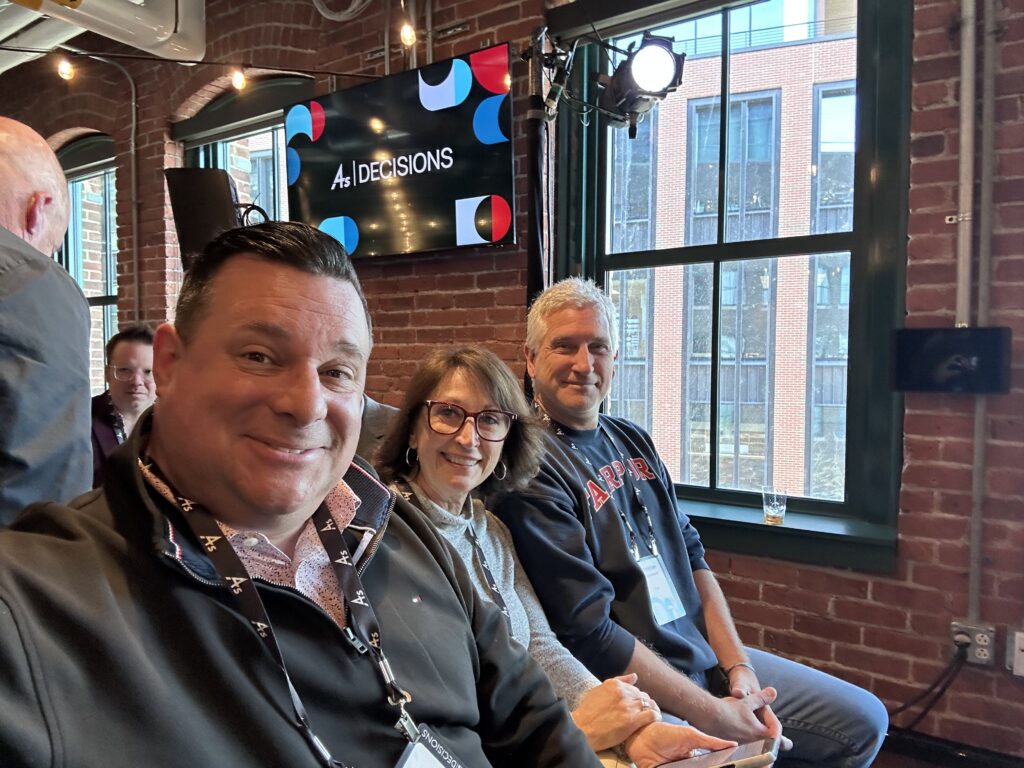
I just returned from the 4A’s Decisions conference in Boston, which I attended with Kim Blaylock, our SVP of Account Service & Strategy, and Christian Wojciechowski, our SVP of Creative & Strategy. The conversations there left us excited, challenged, and more certain than ever about what agencies need to do next. The theme, “Next Agency. Now.” was not just a slogan. It was a clear demand that agencies must redesign how they operate, not just pile shiny, new tools onto old often now outdated processes. The full set of takeaways from the event are terrific and worth reviewing in detail . Below are the ideas that kept surfacing, and my take on what they mean in practice for agencies ready to lead the industry forward.
The Underlying Tension
Across sessions on automation, agentic AI, martech, legal and governance, talent, and client complexity, one tension stood out. Agencies are being pushed to adapt faster than their systems, contracts, and teams were built to handle. AI capability is not the limiting factor. Integration, governance, and organizational design are. In short: capability without coherence is chaos.
Six Signals for How to Move Forward
Speakers and panels distilled the future into a set of signals we should watch and act on:
- Decision-making is shifting to systems: AI agents will increasingly act on behalf of consumers, changing where influence happens.
- Integration is the real work: The value comes from connecting workflows and data, not from adding another point solution.
- Talent is becoming fluid: The most valuable people blend strategy, data and AI/tech fluency.
- AI raises the bar on human value: Execution will no longer differentiate us; judgment, taste and problem definition will.
- Governance must be a core operating function: IP, data, and legal frameworks need to be embedded in workflows.
- Speed plus direction is the real advantage: Rapid iteration matters only when anchored to clear human-centric strategy and measurement.
What That Looks Like in Practice
A few concrete threads kept coming up. First, automation is a margin play. Platforms like Fluency and Merge illustrate how automating repetitive media tasks frees teams to act as the strategist’s clients want. Second, agencies are building internal platforms — Butter at Broadhead or D&G’s Catapult — to standardize data, agents and creative workflows so teams can iterate at scale. One shop has 350 custom GPTs and 120 global GPTs. That level of scale is possible only when data and governance are treated as foundational.
On the creative side, leaders reminded us that originality still wins. As George Sargent put it, AI gives marketers who do not know, to craft endless opportunities to mistake shortcuts for work. The job of agencies is to protect the craft and connecting on a human level, then amplify it with AI. That means creating human checkpoints where outputs are challenged, and measuring distinctiveness not just speed.
Talent and Culture
The sessions made it clear that specialization alone will not suffice. We need hybrid operators who are fluent across disciplines, and managers who can oversee both people and AI agents. Training for “prompt literacy,” structured thinking, and rapid learning velocity are now table stakes. Equally important is treating innovation as a discipline. Instead of one-off pilots, agencies must build repeatable experimentation loops with scale-or-kill decision points and clear adoption metrics.
Governance, Transparency and Ethics
AI increases both output and exposure. We heard a consistent call to build governance into process, not bury it in contracts. Early alignment between legal, data and delivery teams avoids the costly ambiguity clients and agencies are starting to face. Practical rules emerged: use enterprise AI instances only, never personal accounts; document where AI is used; define IP and data usage up front; and create escalation paths for disputes.
Speed With Strategic Anchors
Too many organizations confuse motion with progress. The advantage goes to agencies that pair rapid iteration with strong strategic direction. Start with minimum viable solutions, accept messy early work, and prioritize system coherence. Treat change as a product, with ongoing enablement, not a one-time rollout.
My Takeaway and Where We Go From Here
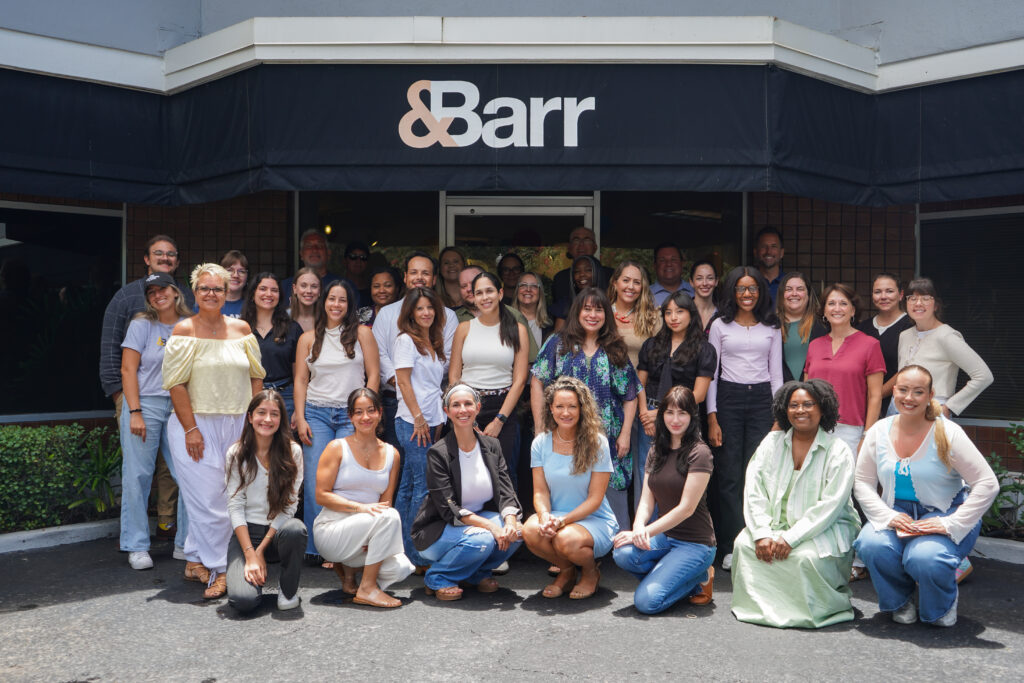
Decisions Boston clarified what we’re already seeing at &Barr. AI is not an add-on; it is reshaping the operating model. Our mandate is straightforward: invest in data foundations, integrate tools into coherent workflows, build hybrid talent, and treat governance and measurement as central functions. Practically, that means more pilots tied to business outcomes, a centralized data warehouse with agentic orchestration on top, structured experimentation loops, and mandatory human review points.
If there’s one idea I keep repeating after this conference it’s this: the gap agencies face today is not a technology gap, it is an organizational gap. Closing that gap is the work of leadership, process and culture. The agencies that do it will not just survive the AI era — they will define it.
If you want to dive deeper into any of these conversations, I’d love to connect and share more of the sessions that inspired us.