Social Media Week
2026
Four Things I’m Stealing from Social Media Week 2026
By: Dominique Pancake, Associate Director of Social Media
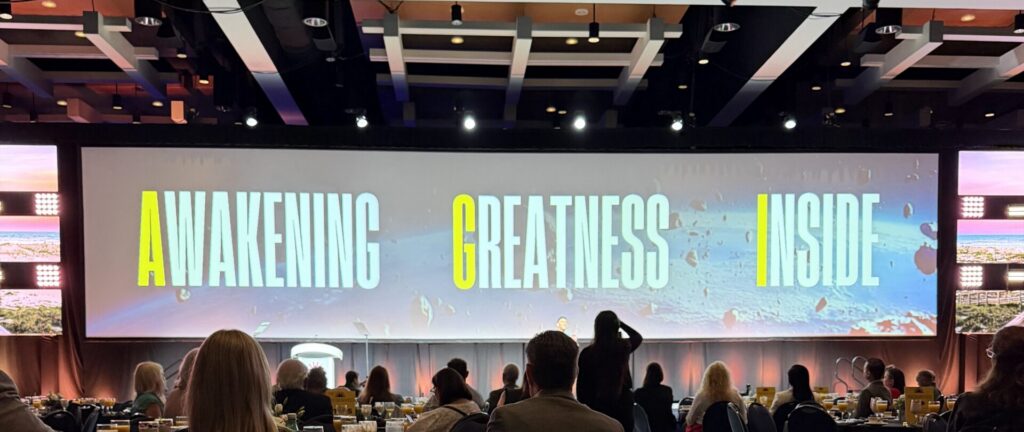
There’s a specific kind of brain fog that sets in around hour five of day two at a conference, where every panel starts to blur into the same string of words, such as “authentic” and “community”. I was bracing for that fog the entire trip but it never came.
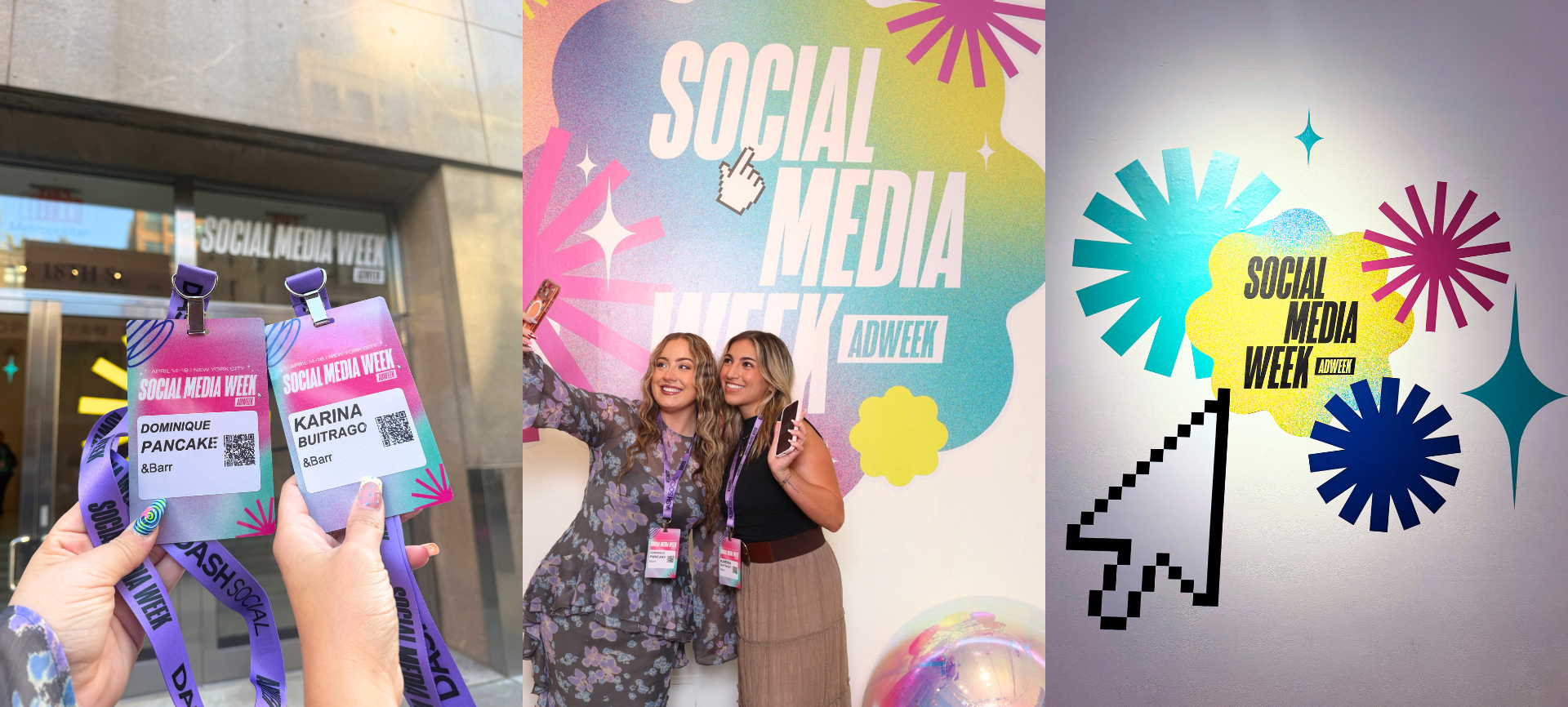
Three days at Adweek’s Social Media Week 2026 with hundreds of social marketers and 30+ pages of notes, and the thing I keep returning to a week later isn’t a tactic… It’s a feeling. The whole industry is mid-shift. Not the kind where everyone gets a new platform to learn or a new format to fake their way through… The deeper kind. The kind where the underlying job of social media is evolving, and the brands still operating on 2022 logic are about to find out what stagnation feels like.
Karina and I went in with a divide-and-conquer plan and came out with overlapping notes on the same handful of ideas, which is usually how you know you’ve heard something true. What follows are the four takeaways I haven’t been able to put down.
1. Comments aren’t a vanity metric. They’re THE brief.
The single most important sentence I heard at SMW2026 came from Rob Lenois, the Global Chief Creative Officer behind Brita’s “Wellness Is Out, Coping Is In” campaign. He called it “CASC: Comments As Creative”. And the more I think about it, the more I think it’s the single biggest reframe of how brand work is supposed to happen right now.
Here’s how Brita’s tagline, “at least you’re hydrated”, actually got made: it wasn’t an all-hands strategy session. It wasn’t a creative offsite. It was a TikTok comment. The team noticed it. The team decided it was the thing. And then they spent the next several months convincing a client (split 50/50 internally on whether to greenlight messy, song-driven, chaotic creative) that the data (and community) backed it up.
The brief used to flow one direction: brand → agency → creative → audience. The audience was the final target. Now the brief is a loop. The audience is upstream of the work, not downstream of it.
The formula:
• audience as target × brand instinct = the old creative process
• audience as contributor × cultural humility = the new one
For our clients, this isn’t talk about “listening better.” It’s a structural change in how briefs get written. We have to start treating comment sections like research panels. The in-jokes, the recurring complaints, the way someone phrases a compliment in three words, that can be the brief now. The best insight is sitting in your replies for free. We just have to have enough humility to read them.
2. TikTok is the lab. Instagram is where you bank the wins.
If CASC was the philosophical takeaway of the conference, this was the operational one, the framework I’m bringing to every client conversation moving forward.
Addie Hearn and Coleen O’Hara from Free People walked through the workflow that took their social to triple-digit growth, and it’s almost embarrassingly simple: plan social one day before and use TikTok as a low-stakes testing space. If a piece of creative pops, it earns its way onto Instagram. If you know your client (or your boss, or legal, or whoever) is going to balk at a format, post it as a “hidden reel” first (a Reel that doesn’t go on the feed) gather the data, then bring it to the meeting.
This solves a problem every social manager has lived through approximately one million times: the gap between what you know will work and what you can get approved. The old model was to argue your way through it. You’d write the deck, show the case studies, do the song and dance. The new model is to skip the dance and let the data show up to the meeting on your behalf.
The deeper insight under all of this is that the algorithm cares about speed and creative. Not polish and perfection. Not the seventeen-stakeholder approval cycle that gives social posts the same gloss of a press release. A line I wrote down twice, both times underlined: “Do less, say less.” Brands posting fewer than 6 times per week saw more engagement than brands posting 6+ times per week. Intentional beats polished every time.
The Brita team said it even more bluntly: learn fast if it doesn’t work, and lean fast into what does. And the part that should be tattooed on every social manager’s forehead: “if it flops, no harm no foul, because no one saw it.” The downside of a failed post is approximately zero. The upside of a hit is exponential growth. Most brands are still budgeting risk like every post is a Super Bowl spot.
The math doesn’t work that way anymore and the fact of the matter is you can’t expect out-of-the-box results without out-of-the-box ideas. Your social team is not asking for more posts. They are asking for fewer, weirder, faster ones, and the permission to fail in public without it becoming a meeting.
3. “Authentic” is the most exhausted word in our industry. It’s also still the answer.
I want to be honest: I may have rolled my eyes a few times when the word “authentic” was said on stage. We’ve been overusing that word for so long that it’s developed the same emotional weight as “low hanging fruit.” But the data is the data, and it doesn’t lie.
From the UGC Unleashed session: only-branded posts drive a 7% lift. Creator/human-led posts drive 14%… double.
What changed isn’t whether authenticity matters, it’s the definition of authenticity itself. “Authentic” used to mean “looks unpolished.” Handheld camera, less scripting, lo-fi audio. And here’s the thing: that version is still true. Sometimes the smartest strategy is still the iPhone-shot, one-take, gritty piece of content.
What’s new is that “authentic” has expanded to mean something more specific on top of that: it means feels human, has a point of view, and isn’t trying to sell you anything in the first three seconds. You can have great cinematography. You can have a real budget. You just can’t have a hard sell or inhumane script on a brand feed and expect anyone to forgive you for it.
4. Organic and paid aren’t two funnels. They’re one engine.
The “Around the World in 80 Frames” panel made the case as clearly as I’ve ever heard it. A handful of (iconic) travel brands sitting on stage, comparing notes about what’s actually working in their funnels, and the answer kept landing in the same place: organic social is the testing ground that makes paid social work. Find what hits organically. Then put paid spend behind it. The result they cited from one travel brand: CPC dropped by 30% when they put entertaining, organic-feeling creative inside their paid funnels. Gen Z and Gen Alpha will scroll past anything that smells like a heavily-branded ad. They will not scroll past content that feels like it belongs on their feed.
This is bigger than a tactical adjustment. It means we cannot keep treating organic and paid as separate line items, with separate teams, separate KPIs, and separate review cadences. The organic team can help do R&D for the paid team.
The formula:
• organic insight × paid amplification = significant return
• organic insight // siloed paid budget = expensive guessing
The Real Takeaway
Here’s the part I didn’t expect to learn at a social media conference: the job is fundamentally less about posting than it used to be.
It’s about listening. It’s about humility. It’s about the discipline to let a community tell you what they want, the courage to actually make it, and the conviction to defend that decision to your stakeholders.
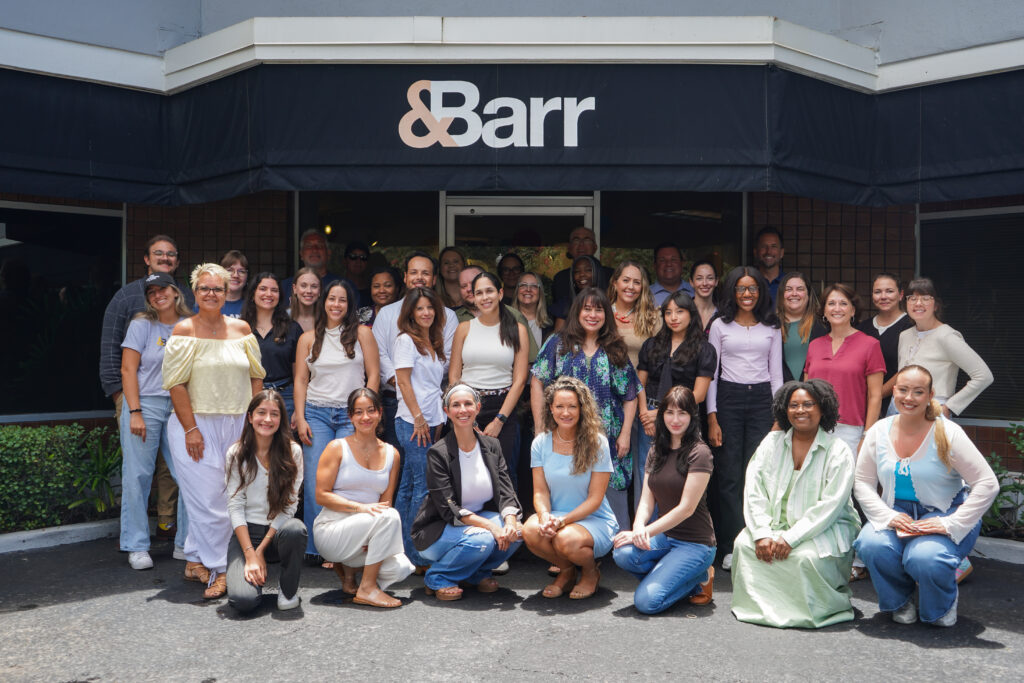
That’s the part of social I think the next five years are about. And it’s the part we’re already building into how we work with brands at &Barr.
If you were at SMW2026 and we didn’t get to chat, please reach out. We’re always down to compare notes, swap takeaways, or just yell about our favorite brands/creators together. ✨